10 Essential Chinese Proverbs That Help Children Navigate Life’s Challenges
November 16, 2025
Mastering Chinese Character Stroke Order: Common Errors and Expert Fixes
November 18, 2025
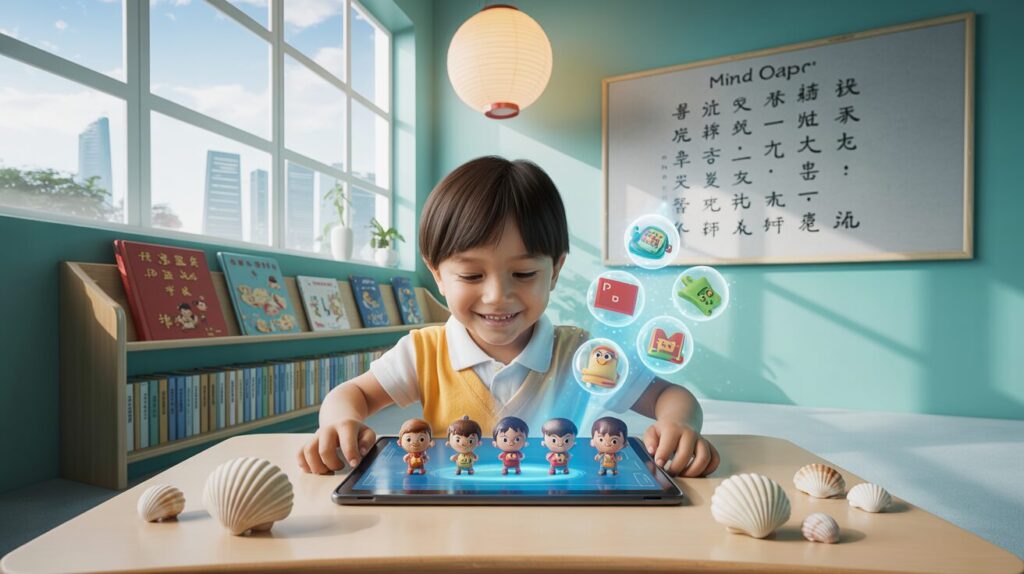
Table of Contents
- Understanding the Importance of Chinese Games for P1 Learners
- Criteria for Selecting Quality Chinese Learning Games
- Top Character Recognition Games for P1 Students
- Vocabulary Building Game Recommendations
- Reading and Comprehension Games for Beginners
- Pronunciation and Listening Games
- Incorporating Games into Your Child’s Learning Routine
- Measuring Progress Through Play
- Common Parent Questions About Chinese Learning Games
- Conclusion
As a parent of a Primary 1 student embarking on their Chinese language journey, you may be searching for engaging ways to support your child’s learning beyond traditional textbooks. Online Chinese games offer an excellent opportunity to transform language learning from a challenging task into an enjoyable adventure that captivates young minds while building essential foundational skills.
At Seashell Academy by Suntown Education Centre, we’ve observed that P1 students who engage with interactive Chinese language games regularly tend to develop greater confidence, better character recognition abilities, and a genuine enthusiasm for the language. These digital resources complement structured learning by reinforcing classroom concepts through play—an approach that aligns perfectly with our Seashell Method of nurturing both academic excellence and emotional well-being.
In this comprehensive guide, we’ll explore the most effective online Chinese games for P1 learners, evaluate their educational benefits, and provide direct links to these valuable resources. You’ll discover how these interactive tools can support your child’s Chinese language development while making the learning experience both meaningful and enjoyable.
10 Best Online Chinese Games for P1 Learners
Interactive digital tools to make Chinese language learning engaging and effective
Character Recognition
- Chinese Characters Alive: Animated stories showing character evolution
- Chinese Writer: Arcade-style tracing game for proper stroke order
- Kids Chinese Podcast: Matching games linking characters to meanings
Vocabulary Building
- Chinese for Kids with Benny: Contextual word learning with a panda guide
- Fun Chinese: Interactive stories introducing 5-8 new words per lesson
- Chinese Skill: Exercises that place vocabulary in simple sentences
Reading & Comprehension
- Better Chinese Stories: Interactive digital library with audio support
- Chinese Reading Adventure: Game-based platform where reading unlocks adventures
- Starfall Chinese: Simple stories with highlighted text and narration
Pronunciation & Listening
- Interactive Pinyin Chart: Click-to-hear sound system exploration
- Tone Pair Drills: Focused practice on Mandarin’s four tones
- Mama Chinese: Voice recognition technology for pronunciation feedback
How to Incorporate Games into Learning
Consistent Schedule
Short, regular 15-20 minute sessions yield better results than occasional marathon sessions
Align with Curriculum
Select games that reinforce what your child is currently learning in their P1 Chinese classes
Parent Participation
When parents show interest in Chinese learning games, children perceive the activity as valuable
Educational Benefits of Game-Based Learning
Positive Associations
Transforms challenging work into engaging activities
Spaced Repetition
Enhances character recognition and retention
Low-Pressure Environment
Builds confidence through risk-free experimentation
Trackable Progress
Analytics help identify patterns in learning
Understanding the Importance of Chinese Games for P1 Learners
The transition to Primary 1 represents a significant milestone in your child’s educational journey, particularly in Chinese language acquisition. At this crucial stage, young learners are developing foundational skills that will shape their relationship with the language for years to come.
Educational games serve as powerful tools in this developmental process for several key reasons. First, they create positive associations with learning Chinese, transforming what might otherwise feel like difficult work into an engaging activity that children eagerly anticipate. This emotional connection to learning aligns with the holistic approach we emphasize at Seashell Academy by Suntown Education Centre, where we believe that genuine learning occurs when children feel emotionally connected to the subject matter.
Additionally, well-designed Chinese games incorporate principles of spaced repetition and immediate feedback—pedagogical techniques proven to enhance character recognition and retention. When P1 students encounter the same characters repeatedly in different game contexts, these characters naturally become embedded in their long-term memory without the fatigue associated with traditional flashcard methods.
Perhaps most importantly, games provide a low-pressure environment where children can experiment with the language, make mistakes, and learn from them without fear of judgment. This builds the confidence and resilience that are essential components of successful language acquisition.
Criteria for Selecting Quality Chinese Learning Games
Not all Chinese learning games offer equal educational value. When evaluating online resources for your P1 child, consider these important factors that our educators at Seashell Academy use when recommending supplementary learning materials:
Educational alignment is paramount—the best games reinforce the specific curriculum concepts that P1 students are learning in school. Look for games that focus on the basic character recognition, simple sentence structures, and foundational vocabulary that align with the MOE Chinese syllabus for Primary 1.
Age-appropriate design matters significantly. Interfaces should be intuitive enough for 6-7 year old children to navigate independently, with clear instructions, vibrant visuals, and gameplay mechanics that don’t require advanced reading skills to understand.
Progressive difficulty features allow the game to grow with your child. Quality educational games adjust to your child’s developing abilities, offering increasingly complex challenges as they master basic concepts. This prevents both frustration from content that’s too difficult and boredom from content that’s too easy.
Finally, consider whether the game provides meaningful feedback. Rather than simply indicating right or wrong answers, the best learning games offer constructive guidance that helps children understand and learn from their mistakes.
Top Character Recognition Games for P1 Students
Character recognition forms the foundation of Chinese language learning for P1 students. These recommended games make the process of identifying and remembering characters engaging and effective:
1. Chinese Characters Alive
This visually appealing game transforms Chinese characters into animated stories that reveal their pictographic origins. When children understand that many Chinese characters began as pictures representing real objects, the characters become more meaningful and memorable.
The game presents characters in an innovative way—showing their historical evolution from ancient pictographs to modern simplified forms. P1 students particularly enjoy the interactive tracing feature that guides them through the correct stroke order while telling the story behind each character.
Website: https://chinesecharactersalive.com
2. Chinese Writer
Developed specifically for beginning learners, Chinese Writer turns character practice into an arcade-style game. Characters fall from the top of the screen, and students must trace them correctly before they reach the bottom. This combination of time pressure and physical tracing creates a multisensory learning experience.
What makes this game particularly valuable for P1 learners is its focus on the 100 most common characters taught in early primary education. The game also offers simplified character sets that can be customized to match exactly what your child is learning in their textbook.
Website: https://www.trainchinese.com/v2/index.php
3. Kids Chinese Podcast Games
Though the name suggests audio content, this platform offers excellent visual games for character recognition. Their matching games and memory tiles use a combination of characters, pinyin, and images to reinforce the connection between written characters and their meanings.
Parents appreciate that these games are organized by thematic units that correspond to common P1 topics like family members, numbers, colors, and animals. This thematic approach helps children build vocabulary networks rather than memorizing isolated characters.
Website: https://kidschinesepodcast.com/games/
Vocabulary Building Game Recommendations
Once P1 learners begin recognizing basic characters, vocabulary building becomes the next critical focus. These games help expand your child’s Chinese vocabulary in engaging ways:
1. Chinese for Kids with Benny
This colorful application features Benny, an animated panda who guides children through vocabulary lessons organized by everyday themes. What sets this game apart is its use of contextual learning—words are presented in natural settings rather than as isolated vocabulary lists.
The game incorporates mini-challenges like word searches, matching exercises, and simple sentence building activities that reinforce new vocabulary. Parents report that the friendly panda character creates an emotional connection that keeps children returning to practice regularly.
Website: https://www.chinesebuddies.com/
2. Fun Chinese
Designed with P1 learners in mind, Fun Chinese presents vocabulary through interactive stories and games. Each lesson introduces 5-8 new words through a short animated story, followed by games that require using these words in different contexts.
What makes this particularly effective for vocabulary building is the spaced repetition system that automatically reintroduces words at optimal intervals for long-term retention. The game tracks which words a child finds challenging and provides additional practice opportunities for those specific terms.
Website: https://www.studychinese.sg/fun-chinese/
3. Chinese Skill
While initially designed for older learners, Chinese Skill offers a beginner path that works wonderfully for P1 students with parental guidance. The game presents vocabulary through a variety of interactive exercises including matching, listening comprehension, and simple sentence creation.
What distinguishes Chinese Skill is its comprehensive approach—words aren’t just introduced in isolation but are immediately used in simple sentences. This contextual learning helps children understand how vocabulary functions within the language structure, a pedagogical approach we emphasize in our P4 Chinese Programme and adapt for younger learners as well.
Website: https://www.chinese-skill.com/cs.html
Reading and Comprehension Games for Beginners
As P1 students develop character recognition and vocabulary skills, they can begin engaging with simple reading activities. These games support early reading development in Chinese:
1. Better Chinese Stories
This digital library offers interactive stories designed specifically for beginning Chinese readers. Each story features simple sentences with supportive illustrations and touch-activated audio. Children can tap on any character they don’t recognize to hear its pronunciation and meaning.
What makes Better Chinese Stories particularly valuable is the careful control of vocabulary and sentence complexity. The stories introduce new characters gradually while repeatedly using previously learned characters, building reading confidence through successful experiences.
Website: https://www.betterchinese.com/pages/better-chinese-stories
2. Chinese Reading Adventure
This game-based reading platform transforms simple stories into interactive adventures where reading comprehension unlocks new game elements. Children read short passages and answer comprehension questions to advance through an engaging adventure narrative.
The gamification of reading creates strong motivation, while the comprehension questions develop critical thinking skills. Parents appreciate that the reading difficulty adjusts based on the child’s performance, providing an appropriate challenge level.
Website: https://www.chinesereadingadventure.com/
3. Starfall Chinese
Adapted from the popular English reading program, Starfall Chinese offers simple interactive stories with highlighted text as the narration plays. The stories feature predictable sentence patterns that reinforce grammatical structures while building reading fluency.
Each story concludes with mini-games that check comprehension through picture matching and sentence sequencing activities. The gradual progression from character recognition to word identification to sentence reading makes this an excellent choice for P1 learners.
Website: https://www.starfallchinese.com/
Pronunciation and Listening Games
Developing proper pronunciation and listening skills is crucial for P1 students. These interactive games focus specifically on the sound system of Chinese:
1. Interactive Pinyin Chart
This digital tool transforms traditional pinyin charts into an interactive experience. Children can click on any syllable to hear it pronounced clearly by a native speaker. The visual organization helps students understand the systematic nature of Chinese sounds.
The game component involves pronunciation challenges where students hear a sound and must identify the correct pinyin. This develops crucial listening discrimination skills that form the foundation for accurate pronunciation.
Website: https://pinyinchart.net/games
2. Tone Pair Drills
Mastering the four tones of Mandarin presents a significant challenge for P1 learners. This specialized game focuses exclusively on tone discrimination through engaging pair matching activities. Children hear words and must identify which tones they heard.
What makes this particularly effective is the focus on minimal pairs—words that differ only by tone. This targeted practice helps children develop the fine-tuned listening skills needed to distinguish between similar-sounding words.
Website: https://www.archchinese.com/chinese_tone_drill.html
3. Mama Chinese
This comprehensive audio-focused game uses voice recognition technology to provide feedback on pronunciation. Children repeat words and phrases after a native speaker model, and the application evaluates their pronunciation accuracy.
The game structure rewards improvement rather than perfection, encouraging children to keep practicing until they develop better pronunciation habits. The recordings feature both male and female voices, helping children adapt to different speaking styles.
Website: https://www.mamachinese.com/
Incorporating Games into Your Child’s Learning Routine
At Seashell Academy by Suntown Education Centre, we emphasize that how games are implemented is just as important as which games you choose. Here are effective strategies for integrating these digital resources into your child’s Chinese learning journey:
Establish a consistent schedule for game-based learning. Short, regular sessions of 15-20 minutes typically yield better results than occasional marathon sessions. Consider creating a “Chinese game time” that occurs at the same time each day to build a sustainable learning habit.
Connect game content to school learning by selecting games that reinforce what your child is currently studying in their P1 Chinese curriculum. When children encounter the same characters and vocabulary in both their textbooks and games, the reinforcement strengthens neural pathways and accelerates learning.
Participate alongside your child whenever possible. When parents show interest and engagement with Chinese learning games, children perceive the activity as valuable and worthy of attention. Even if your own Chinese skills are limited, your presence and encouragement significantly enhance the learning experience.
Balance digital games with physical application of the language. After a game session, encourage your child to write newly learned characters on paper or use new vocabulary in simple conversations. This multi-modal approach helps transfer knowledge from the digital environment to real-world language skills, a principle that guides our Programme Philosophy at Seashell Academy.
Measuring Progress Through Play
One advantage of digital Chinese learning games is their ability to track progress in ways that traditional learning methods often cannot. Here’s how to effectively monitor your child’s development through game-based learning:
Many quality educational games include built-in assessment features that provide detailed reports on your child’s performance. Look for games that track accuracy rates, completion times, and specific areas of difficulty. These analytics can help you identify patterns in your child’s learning that might not be apparent through casual observation.
Create simple progress journals where you and your child can record new characters learned or vocabulary mastered through gameplay. This documentation creates a tangible record of achievement that builds confidence and motivation as children visually see their growing Chinese language skills.
Periodically review game difficulty levels and ensure they continue to provide appropriate challenges. When your child consistently achieves high scores or completes levels quickly, it may be time to advance to more complex content that introduces new learning objectives.
Consider how gaming skills transfer to formal assessments. While games themselves shouldn’t be viewed as test preparation, the knowledge acquired through engaging gameplay often translates to improved performance on school assignments and examinations. This approach aligns with our teaching methods in our P5 Chinese Programme and P6 Chinese Programme, where we focus on building transferable skills rather than rote memorization.
Common Parent Questions About Chinese Learning Games
How Much Screen Time is Appropriate for Educational Games?
Parents often worry about balancing the benefits of educational games against concerns about excessive screen time. At Seashell Academy by Suntown Education Centre, we recommend limiting Chinese learning game sessions to 20-30 minutes per day for P1 students. This duration provides meaningful learning opportunities without overwhelming young learners or contributing to screen fatigue.
Remember that educational screen time differs qualitatively from passive entertainment. Active engagement with language learning games involves cognitive processing and skill development that makes this form of screen time more valuable than passive viewing activities.
Are Paid Games Worth the Investment?
While many excellent free resources exist, premium Chinese learning games often offer more comprehensive content, better progress tracking, and more sophisticated adaptive learning features. Consider starting with free options to gauge your child’s interest and engagement before investing in subscription-based resources.
If you do choose to invest in paid games, prioritize those that offer family accounts where multiple profiles can be created. This allows siblings at different levels to benefit from the same resource, maximizing the value of your investment.
How Do Games Complement Formal Chinese Instruction?
Educational games should complement rather than replace structured Chinese learning. The most effective approach combines formal instruction—whether through school or enrichment programs like our Mathematics Programme—with reinforcement through games.
Games excel at motivation and repetition, while formal instruction provides systematic coverage of curriculum content and development of productive language skills. When these approaches work in tandem, children benefit from both structured learning and engaging practice opportunities.
Conclusion
Online Chinese games represent powerful tools in your P1 child’s language learning journey. When thoughtfully selected and integrated into a balanced learning approach, these interactive resources transform what might otherwise be challenging memorization tasks into engaging experiences that foster genuine enthusiasm for the Chinese language.
At Seashell Academy by Suntown Education Centre, we recognize that sustainable learning occurs when children develop both skills and positive emotional connections to the subject matter. The games reviewed in this guide support this holistic approach by making Chinese character recognition, vocabulary building, reading comprehension, and pronunciation practice accessible and enjoyable.
Remember that the most effective learning happens when digital tools complement rather than replace human guidance. Your involvement, encouragement, and interest in your child’s Chinese language journey remain the most important factors in their success.
As you explore these resources with your child, focus less on immediate academic outcomes and more on nurturing a genuine curiosity about Chinese language and culture. This foundation of intrinsic motivation will serve them well throughout their primary education and beyond.
Looking for more personalized guidance on supporting your child’s Chinese language development? Seashell Academy by Suntown Education Centre offers specialized Primary Chinese tuition programs designed to nurture confident, enthusiastic learners.
Our experienced MOE-trained educators use the unique Seashell Method to combine academic excellence with emotional well-being, creating a learning environment where every child can flourish.
Contact us today to learn how we can support your child’s Chinese language journey through our holistic, student-centered approach.