Water Pollution Experiment: How to Create an Effective Homemade Water Filter
December 18, 2025
Key Science Keywords & Definitions Cheat Sheet for Primary School Students
December 21, 2025
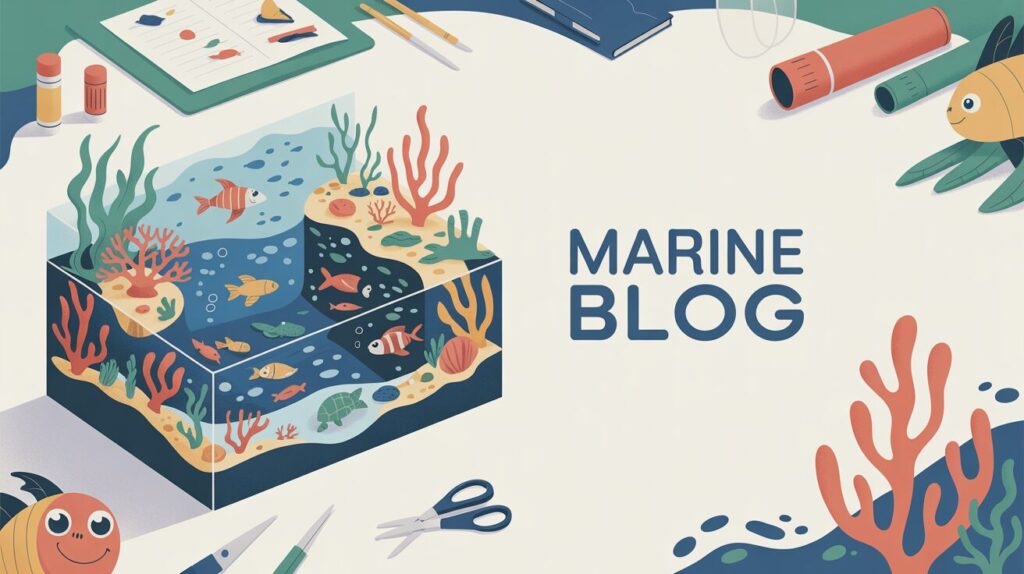
Table Of Contents
- Why Marine Food Webs Matter in Primary Science Education
- Learning Objectives: Beyond the Diorama
- What You’ll Need for Your Marine Ecosystem Diorama
- Understanding Marine Food Webs Before You Build
- Step-by-Step Diorama Creation Guide
- Taking Learning Further: Extension Activities
- Common Challenges and How to Overcome Them
- Presenting and Assessing the Project
When your child comes home with a science project assignment about marine food webs, you might wonder how to transform this into a meaningful learning experience rather than just another task to complete. At Seashell Academy by Suntown Education Centre, we believe that hands-on projects like marine ecosystem dioramas aren’t just about creating something visually appealing—they’re opportunities for deep understanding that sticks with students long after the project is submitted.
A well-executed marine ecosystem diorama project does more than demonstrate what eats what in the ocean. It develops critical thinking as students analyze relationships between organisms, nurtures creativity through three-dimensional design, and builds confidence when children can explain complex ecological concepts in their own words. This is the kind of sustainable learning that we champion at Seashell Academy—where knowledge becomes genuinely understood rather than temporarily memorized.
In this comprehensive guide, we’ll walk you through creating a marine food web diorama that captivates both your child’s imagination and their teacher’s attention. More importantly, we’ll show you how to use this project as a springboard for the kind of real-world application and conceptual understanding that transforms students from passive learners into curious explorers of the natural world.
Why Marine Food Webs Matter in Primary Science Education
Marine food webs represent one of the most accessible entry points for young learners to grasp ecological concepts that they’ll build upon throughout their academic journey. Unlike terrestrial ecosystems that might feel abstract to urban-dwelling Singaporean students, ocean environments offer inherent fascination—the mystery of underwater life captures children’s natural curiosity.
The study of food webs teaches students to think in systems rather than isolated facts. When a Primary 4 student learns that phytoplankton supports small fish, which feed larger fish, which sustain apex predators like sharks, they’re developing the same analytical thinking skills needed for complex problem-solving across all subjects. This interconnected thinking aligns perfectly with the mind-mapping approaches we use in our Mathematics Programme, where students learn to see relationships between concepts rather than memorizing disconnected formulas.
Moreover, marine ecosystems provide powerful lessons about balance, consequences, and environmental stewardship—topics that resonate deeply with today’s generation of young learners who are growing up aware of climate change and conservation challenges. When children understand that removing one species from a food web creates ripple effects throughout the entire system, they’re developing the kind of thoughtful, connected perspective that serves them well beyond the science classroom.
Learning Objectives: Beyond the Diorama
Before diving into materials and construction, it’s valuable to understand what your child should gain from this project. At Seashell Academy, we always emphasize understanding the ‘why’ behind learning activities—this transforms compliance into genuine engagement.
Core scientific concepts that this project reinforces include the difference between food chains and food webs, the role of producers (phytoplankton and marine plants), consumers at various trophic levels, and decomposers that complete the nutrient cycle. Students should be able to explain energy transfer through the ecosystem and identify relationships like predation, competition, and symbiosis.
Beyond content knowledge, this project develops essential skills that support academic growth across all subjects. Research and information synthesis occur when students gather facts about different marine organisms. Spatial reasoning and design thinking emerge during the planning and construction phases. Communication skills develop as they prepare to present and explain their diorama. Perhaps most importantly, the project builds confidence—when a child can create something tangible that demonstrates their understanding, they develop the self-assurance that comes from mastery.
This holistic development is central to our approach at Seashell Academy, where we recognize that academic excellence and emotional well-being aren’t separate goals but interconnected aspects of effective education. A student who feels proud of their diorama is more likely to engage deeply with science concepts, just as our personalized coaching helps students build both competence and confidence simultaneously.
What You’ll Need for Your Marine Ecosystem Diorama
Gathering materials before starting ensures smooth project execution and reduces frustration. Here’s a comprehensive list of what you’ll need, with options for different budgets and creative preferences:
Basic Structural Materials
- Shoebox or similar container (transparent plastic containers work beautifully for a more immersive underwater effect)
- Blue cardstock or construction paper for the ocean background (multiple shades create depth)
- Green and brown paper for seaweed, kelp, and ocean floor elements
- Clear fishing line or thread for suspending organisms at different depths
- Scissors and craft knife (adult supervision required)
- Glue gun and craft glue (hot glue for secure attachment, white glue for paper)
- Tape (clear and double-sided)
Materials for Marine Organisms
- Modeling clay or air-dry clay for sculpting sea creatures
- Printable images of marine organisms (laminated for durability)
- Craft foam or felt in ocean colors
- Pipe cleaners for creating jellyfish tentacles or coral structures
- Cotton or polyester filling for creating jellyfish bodies
- Googly eyes (optional but engaging for younger students)
- Markers, colored pencils, or paint for adding details
Enhancement Materials
- Sand or small pebbles for the ocean floor
- Shells (real or craft versions)
- Small rocks for creating reef structures
- Cellophane or blue tissue paper for creating water effects
- LED tea lights (battery-operated) for bioluminescent effects in deep-sea dioramas
- Index cards or small labels for identifying organisms and showing feeding relationships
Don’t feel pressured to purchase everything on this list. The most effective dioramas often combine purchased materials with found objects and recyclables. A cardboard egg carton becomes coral, bubble wrap transforms into sea foam, and aluminum foil can represent silvery fish scales. This resourcefulness itself teaches valuable lessons about creativity and problem-solving.
Understanding Marine Food Webs Before You Build
The construction phase becomes much more meaningful when students first understand the ecological relationships they’re representing. This foundational knowledge transforms the diorama from an art project into a scientific model.
The Building Blocks: Trophic Levels
Marine ecosystems, like all ecosystems, organize into trophic levels based on how organisms obtain energy. At the foundation sit the producers—primarily phytoplankton, tiny photosynthetic organisms that float near the ocean’s surface, along with marine plants like seagrass and kelp. These organisms convert sunlight into chemical energy through photosynthesis, forming the base of the entire food web.
Primary consumers feed directly on producers. In marine environments, these include zooplankton (tiny drifting animals), small fish, sea urchins, and some species of crabs and shrimp. These herbivores form the crucial link between the microscopic producer level and larger ocean animals.
Secondary consumers eat the primary consumers. Medium-sized fish, squid, sea stars, and many species of jellyfish occupy this level. Tertiary consumers—larger predatory fish, sea turtles, seals, and dolphins—feed on secondary consumers. At the apex sit top predators like sharks and orcas, which have few natural predators themselves.
Finally, decomposers such as bacteria and some species of worms break down dead organisms at all levels, returning nutrients to the water where they can be used again by producers. This completes the nutrient cycle that keeps the ecosystem functioning.
Food Chains vs. Food Webs: A Critical Distinction
Many students initially learn about food chains—simple linear sequences like “phytoplankton → small fish → larger fish → shark.” While food chains help introduce the concept of energy transfer, they oversimplify the reality of ecosystems. Real marine environments function as food webs—complex, interconnected networks where most organisms eat multiple food sources and are, in turn, eaten by multiple predators.
For example, a sea turtle might eat jellyfish, seagrass, and small crustaceans. If jellyfish populations explode due to overfishing of their predators, sea turtles might have more food available. However, if those same jellyfish compete with small fish that also eat zooplankton, and those small fish are another food source for sea turtles, the effect becomes complex. This interconnectedness is what makes food webs fascinating—and what makes this project such a valuable learning experience.
When planning the diorama, encourage your child to include at least 8-10 different organisms representing multiple trophic levels, with several feeding relationships illustrated between them. This complexity makes the model scientifically accurate and demonstrates deeper understanding than a simple linear food chain.
Step-by-Step Diorama Creation Guide
Now that the conceptual foundation is solid, it’s time to build. This process works best when spread across several sessions rather than rushed in one evening—sustainable learning happens when students have time to think, create, and refine their work.
1. Research and Planning – Building the Knowledge Foundation
Before touching any craft materials, have your child research their chosen marine ecosystem. Will it be a coral reef teeming with biodiversity? A kelp forest off temperate coastlines? The deep ocean with its bioluminescent creatures? Or perhaps coastal waters with a mix of habitats? Each choice offers different organisms and relationships to explore.
Create a simple planning sheet where your child lists the organisms they’ll include, their trophic level, what they eat, and what eats them. This planning document demonstrates understanding before construction begins and serves as a reference during building. At Seashell Academy, we emphasize this kind of structured planning because it develops organizational skills that benefit students across all subjects—the same structured approach we apply in our Programme Philosophy that helps students tackle complex problems systematically.
2. Creating the Ocean Environment – Setting the Stage
Begin by transforming your shoebox into an underwater world. Position the box on its side so the opening faces you like a window into the ocean. Layer different shades of blue paper on the back and sides to create depth—lighter blues near the top (where sunlight penetrates) graduating to darker blues toward the bottom (the deeper, dimmer waters).
Add the ocean floor using sand, small pebbles, or brown and tan paper. If your ecosystem includes coral reefs, this is the time to create those structures using painted cardboard, clay, or even painted popcorn for an interesting texture. For kelp forests, create tall strands of brown and green paper or fabric that extend from the floor toward the surface. The environment should clearly represent the chosen habitat before any organisms are added.
3. Crafting the Organisms – Bringing the Food Web to Life
Create each organism with enough detail that viewers can identify them, but don’t stress about artistic perfection. Students can draw and cut out organisms, mold them from clay, create them from craft foam, or print and laminate images. Each organism should be labeled with its name and trophic level.
A helpful tip: Create organisms at different scales that make visual sense in your diorama, even if they’re not proportionally accurate to real life. A shark doesn’t need to be hundreds of times larger than the phytoplankton—just noticeably larger than the small fish it eats. This is about demonstrating relationships, not creating a to-scale model.
4. Positioning and Suspending – Creating Depth and Dimension
This is where the diorama truly comes alive. Use fishing line or thread to suspend organisms at different depths, creating a three-dimensional underwater scene. Attach the line to the top of the box, varying lengths so some organisms appear near the surface while others hover at mid-depths or rest on the ocean floor.
Consider the natural positioning of each organism. Phytoplankton and other producers should be near the surface where sunlight reaches. Reef fish might cluster around coral structures. Bottom feeders rest on the ocean floor. Apex predators patrol through open water. This realistic positioning reinforces students’ understanding of each organism’s ecological niche.
5. Illustrating Feeding Relationships – Making the Web Visible
The final and most critical step is showing the feeding relationships that create the food web. Use different colored strings or drawn arrows to connect organisms in predator-prey relationships. Color-coding helps viewers follow different food chains within the larger web—perhaps red arrows for one chain, blue for another, green for a third.
Create a legend that explains the arrow system (“arrows point from prey to predator” or “arrows show energy flow”). Some students add small labels along the arrows describing the relationship: “eats,” “consumed by,” or “provides energy to.”
Don’t forget to include decomposers and their role. Arrows from all trophic levels should point to decomposers, showing that all organisms eventually return nutrients to the ecosystem. An arrow from decomposers back to producers completes the nutrient cycle.
Taking Learning Further: Extension Activities
The diorama itself is just the beginning. These extension activities deepen understanding and connect classroom learning to real-world contexts—exactly the kind of real-life application that Seashell Academy emphasizes across all our programmes.
Ecosystem Disruption Scenarios
Once the diorama is complete, pose “what if” questions that challenge your child to think about ecosystem dynamics. What happens if overfishing removes most of the sharks? What if pollution kills the phytoplankton? What if an invasive species is introduced? Have your child predict the effects on other organisms in the food web, then research whether similar events have occurred in real marine ecosystems. This critical thinking exercise develops analytical skills applicable far beyond science class.
Quantifying Energy Transfer
For students ready for more advanced concepts, introduce the 10% rule—approximately only 10% of energy transfers from one trophic level to the next. If your phytoplankton represents 10,000 units of energy, the zooplankton that eat them might receive 1,000 units, the small fish 100 units, and so on. Create a simple calculation sheet showing this energy pyramid. This numerical application reinforces both scientific concepts and mathematical skills, demonstrating the interdisciplinary nature of real learning.
Singapore’s Marine Connection
Help your child research marine ecosystems in Singapore’s waters. What species live in our coral reefs? What food web relationships exist at our shores? Are any local species threatened? This local connection makes the abstract concept personally relevant and can spark genuine interest in marine conservation. Consider planning a family visit to the S.E.A. Aquarium or a guided nature walk at Chek Jawa to observe real marine organisms and their habitats.
Common Challenges and How to Overcome Them
Every project brings obstacles. Here’s how to navigate the most common challenges while maintaining the learning experience rather than just completing a task.
Challenge: Oversimplification
Some students create beautiful dioramas that show only simple, linear food chains rather than interconnected webs. Gently challenge this by asking questions: “Does the sea turtle only eat one type of food? What else might compete with the small fish for zooplankton?” Encourage adding at least 2-3 additional feeding relationships to any initial plan. The complexity itself demonstrates deeper understanding.
Challenge: Scale and Proportion Confusion
Students sometimes struggle with representing organisms of vastly different sizes—how do you show both microscopic phytoplankton and massive whales? Acknowledge this challenge openly, then explain that the diorama is a conceptual model rather than a to-scale replica. The goal is showing relationships, not precise proportions. Phytoplankton can be represented by green dots or a labeled area near the surface; they don’t need to be invisible to represent their true size.
Challenge: Parent Over-Involvement
It’s tempting to take over when you see your child struggling with the hot glue gun or when the shark they’ve drawn looks more like a submarine. Resist this urge. The educational value lies in your child’s thinking, problem-solving, and creating—not in submitting a professionally crafted diorama that doesn’t represent their own work. Offer guidance and assistance with dangerous tools, but let the creative decisions and construction remain theirs. A slightly wobbly diorama that the student can fully explain demonstrates far more learning than a perfect one created largely by parents.
This principle aligns with our approach at Seashell Academy, where we provide personalized coaching that guides students toward understanding rather than simply giving them answers. We scaffold learning to support students at their current level while building the skills and confidence to tackle increasingly complex challenges independently.
Presenting and Assessing the Project
The presentation component transforms the diorama from a static display into a dynamic demonstration of understanding. Prepare your child to explain their ecosystem with confidence—not by memorizing a script, but by genuinely understanding the relationships they’ve modeled.
Practice with questions like: “Tell me about the most important organism in your ecosystem,” “What would happen if we removed the sea urchins?” or “Which organism has the most connections to others?” These questions can’t be answered by rote memorization—they require real comprehension of the food web dynamics.
Encourage your child to create a brief written explanation to accompany the diorama. This shouldn’t be a lengthy essay but a concise description covering: the ecosystem type, the organisms included and their roles, at least three specific feeding relationships, and one interesting fact about how this ecosystem functions. This written component reinforces communication skills and ensures that the visual model is supported by clear explanation.
When the project returns home after grading, don’t simply file it away. Ask your child what they learned, what surprised them during their research, and what they would do differently if creating another ecosystem diorama. This reflection cements learning and develops the metacognitive awareness—thinking about their own thinking—that characterizes strong learners.
Creating a marine ecosystem diorama offers far more than a colorful project to display in the classroom. When approached thoughtfully, it becomes a gateway to understanding complex ecological relationships, developing research and critical thinking skills, and building the kind of deep, conceptual knowledge that extends far beyond a single science topic.
At Seashell Academy by Suntown Education Centre, we recognize that memorable learning happens when students actively engage with concepts rather than passively receiving information. Hands-on projects like this diorama embody our philosophy that education should nurture genuine understanding and curiosity, not just prepare students to answer test questions. The confidence your child gains from creating something meaningful with their own hands, the connections they draw between organisms in an ecosystem, and the real-world relevance they discover in marine conservation—these are the pearls of learning that form within the protective environment of thoughtful, holistic education.
Whether your child is tackling this project for Primary 3 science enrichment or as part of their Primary 6 curriculum, the key is maintaining focus on understanding over mere completion. Guide them through the research, support them during construction challenges, and celebrate their ability to explain complex food web dynamics in their own words. This is sustainable learning at its finest—knowledge that doesn’t fade after the test but becomes part of how they understand the living world around them.
The marine ecosystem may be in a shoebox, but the learning it inspires can ripple outward through your child’s entire educational journey, fostering the resilient, curious, confident learner that every child has the potential to become.
Nurture Your Child’s Love for Learning
At Seashell Academy by Suntown Education Centre, we believe every child deserves an education that builds both knowledge and confidence. Our specialized programmes in Chinese, Mathematics, and Science use the proven Seashell Method to develop deep understanding through interactive, engaging lessons tailored to your child’s needs.
From P4 Chinese through P6 Chinese, and our comprehensive Mathematics Programme, we combine academic excellence with emotional well-being to create resilient learners who genuinely love learning.