Magnet Strength Investigation: A Complete Guide to Changing Variables for Primary Students
December 26, 2025
Best Science Assessment Books for Primary Students: A Complete Singapore Parent’s Guide
December 28, 2025
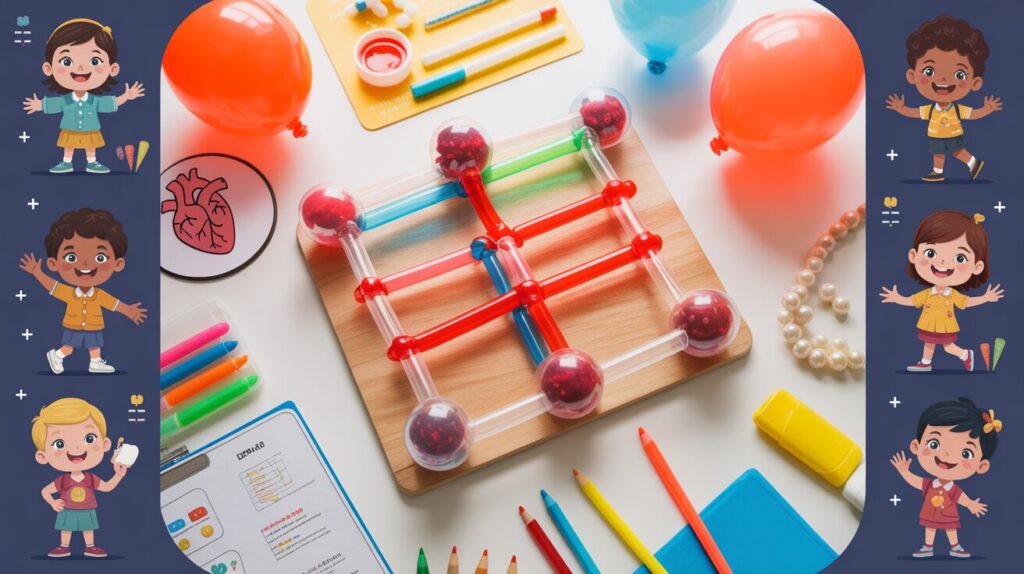
Table Of Contents
- Why Build a Circulatory System Model?
- Understanding the Basics: How Your Heart Works
- What You’ll Need for Your Model
- Step-by-Step Building Instructions
- How to Demonstrate Blood Flow
- Extending the Learning Experience
- Troubleshooting Common Challenges
- Connecting to Singapore Primary Science Curriculum
Imagine trying to explain how blood travels through your body to a primary student using only textbook diagrams and memorized facts. While these traditional methods have their place, they often fail to ignite that spark of genuine curiosity and understanding that transforms learning from a chore into an adventure.
At Seashell Academy by Suntown Education Centre, we believe that real learning happens when students can touch, build, and experiment with scientific concepts. Building a circulatory system model using straws and balloons perfectly embodies this philosophy – it transforms abstract biological processes into a tangible, interactive experience that Primary 3-6 students can actually see and manipulate.
This hands-on STEM activity doesn’t just help students memorize the parts of the circulatory system; it helps them understand the elegant mechanics of how their heart pumps blood throughout their body. Through this guided project, young learners develop critical thinking skills, scientific observation abilities, and the confidence that comes from successfully building something meaningful with their own hands.
In this comprehensive guide, we’ll walk you through everything you need to create an effective circulatory system model – from gathering simple household materials to facilitating meaningful learning moments that align with Singapore’s Primary Science curriculum. Whether you’re a parent supporting home learning or an educator seeking engaging classroom activities, this step-by-step resource will help you turn science education into an exciting, memorable experience.
Circulatory System Model Quick Guide
Build, Learn, and Understand How Your Heart Works!
Materials Needed
- Clear plastic straws (4-6)
- Small balloons (2)
- Plastic bottle (500ml)
- Red food coloring
- Modeling clay/playdough
- Tape & scissors
Why Build This?
- Makes abstract concepts concrete
- Engages multiple learning styles
- Builds scientific confidence
- Aligns with Primary 5-6 syllabus
- Develops critical thinking
- Creates memorable learning
Building Steps at a Glance
Prepare Balloon
Cut & stretch balloon for heart chamber
Setup Bottle
Add colored water & create holes
Connect Straws
Create circulation pathway
Add Valve
Create one-way flow with clay
Test & Learn
Squeeze & observe blood flow
Key Learning Outcomes
Understand pumping action: See how heart chambers contract & expand
Learn valve function: Discover why one-way flow is critical
Visualize circulation: Track blood’s journey through the body
Build STEM skills: Practice observation, problem-solving & engineering
Troubleshooting Tips
Water leaks? Add more tape/clay around connections
Valve not working? Adjust clay flap position & flexibility
Weak suction? Check for air leaks in system
Water stuck? Look for blockages or kinked straws
The Seashell Academy Difference
We transform abstract concepts into memorable experiences through hands-on learning. Our approach combines academic excellence with genuine understanding, building confident learners who love science—not just students who memorize facts.
💡 Pro Teaching Tip
Have students feel their pulse while operating the model, matching their heartbeat rhythm. This personal connection makes the learning unforgettable and helps them truly understand that this system is working inside them right now!
Why Build a Circulatory System Model?
The human circulatory system is one of those fascinating topics that can either captivate students or leave them utterly confused. When presented only through textbook illustrations, many primary students struggle to grasp how blood actually moves through chambers, valves, and vessels in a coordinated rhythm. A physical model bridges this comprehension gap in remarkable ways.
Concrete learning for abstract concepts – Young learners, particularly those in Primary 3-5, are still developing abstract thinking abilities. A straw-and-balloon model provides a concrete representation they can observe, manipulate, and reference while building their mental framework of how circulation works. This aligns perfectly with constructivist learning principles that form the foundation of effective science education.
Building this model also supports multiple learning styles simultaneously. Visual learners see the flow of liquid through transparent straws; kinesthetic learners engage through the hands-on construction and pumping action; and logical learners appreciate understanding the cause-and-effect relationships between squeezing the balloon and liquid movement. This multi-sensory approach reflects the philosophy we embrace in our Programme Philosophy at Seashell Academy, where we recognize that each child’s learning journey is unique.
Perhaps most importantly, this activity transforms students from passive recipients of information into active scientists. They’re not just learning about the circulatory system – they’re engineering a functional model, troubleshooting problems, and discovering principles through experimentation. This builds the confidence and curiosity that extend far beyond any single lesson or examination.
Understanding the Basics: How Your Heart Works
Before diving into construction, it’s essential that students understand the biological system they’re modeling. This foundational knowledge transforms the activity from simple craft-making into meaningful scientific exploration.
The human heart functions as a double pump system with four chambers: two atria (upper chambers) and two ventricles (lower chambers). The right side of your heart receives oxygen-poor blood from your body and pumps it to your lungs, where it picks up oxygen. The left side receives this oxygen-rich blood from your lungs and pumps it powerfully throughout your entire body. This continuous cycle happens roughly 100,000 times every single day!
Valves play a crucial role in this system – they act like one-way doors that prevent blood from flowing backward. When your heart muscle contracts (squeezes), it creates pressure that pushes blood forward through open valves. When the heart relaxes, these valves snap shut, preventing backflow and creating that distinctive “lub-dub” heartbeat sound you can hear with a stethoscope.
The model we’ll build demonstrates these key principles: the pumping action of the heart chambers, the one-way flow created by valves, and the pathway blood follows through the circulatory loop. While simplified, it captures the essential mechanics that help students visualize and understand this remarkable biological system. At Seashell Academy, we emphasize this connection between hands-on activities and conceptual understanding across all our programmes, including our comprehensive Mathematics Programme, where we similarly prioritize real-world application over rote memorization.
What You’ll Need for Your Model
One of the beautiful aspects of this project is its accessibility – all materials are inexpensive and readily available. Gathering these items beforehand ensures a smooth, frustration-free building experience.
Essential Materials:
- Clear plastic straws (4-6 straws) – Clear straws work best because students can observe the liquid flowing through them
- Two small balloons – Standard party balloons work well; different colors can help distinguish different parts of the system
- A plastic bottle (500ml) – This serves as the body/reservoir for your circulatory system
- Food coloring (red works best) – This represents blood and makes the flow clearly visible
- Water (about 300-400ml) – This serves as your “blood”
- Clear tape or duct tape – For securing connections
- Scissors – For cutting straws and making holes
- Modeling clay or playdough – To create seals and valve mechanisms
Optional but Helpful Materials:
- Flexible tubing – Can replace or supplement straws for easier bending
- Small ping pong ball – Can be used to demonstrate valve action
- Permanent markers – For labeling different parts of the system
- Cardboard base – Provides stability during demonstration
- Rubber bands – Additional securing options for connections
Having all materials organized before beginning helps maintain student engagement and allows the focus to remain on understanding the scientific concepts rather than scrambling for supplies.
Step-by-Step Building Instructions
This construction process works best when students understand not just what they’re building, but why each component matters. Guide them through these steps while continually connecting the model parts to their real-life heart anatomy.
1. Prepare Your Balloon Heart Chambers – Take one balloon and cut off the narrow neck portion, leaving the round bulb section. This balloon will represent your heart’s pumping chamber (ventricle). The elasticity of the balloon mimics how your heart muscle can contract and expand. Stretch it a few times to make it more pliable and easier to work with during demonstrations.
2. Create the Bottle Body Reservoir – Fill your plastic bottle about two-thirds full with water and add red food coloring until it resembles blood. This bottle represents your body – the destination where oxygen-rich blood needs to travel. Make a small hole near the bottom of the bottle (this is where blood will enter) and another hole near the top (where blood will exit back toward the heart). Ensure these holes are just large enough to fit your straws snugly.
3. Assemble the Circulation Pathway – Insert one straw into the bottom hole of your bottle – this represents the artery carrying blood FROM the heart TO the body. Insert another straw into the top hole – this represents the vein carrying blood FROM the body BACK to the heart. Use modeling clay or tape around the holes to create watertight seals. Any leakage will disrupt your demonstration and confuse the learning point.
4. Attach the Heart Pump – Stretch the cut balloon over the mouth of one straw (the “artery” from step 3). Secure it tightly with rubber bands or tape to create an airtight seal. This balloon chamber is your heart model. When you press it, you create pressure just like your heart muscle creates pressure when it contracts. When you release it, the balloon expands back, creating suction that draws liquid in – just like your heart refills between beats.
5. Create One-Way Valve Action – This is the crucial component that makes your model function like a real heart. Take a small piece of modeling clay and create a flap valve inside the straw near the balloon. This valve should allow water to flow easily in one direction (away from the balloon when squeezed) but block backward flow when the balloon relaxes. Test this several times – adjusting the valve is often necessary and provides excellent troubleshooting practice for students.
6. Complete the Circuit – Connect the return vein (the straw from the top of your bottle) back to create a complete loop. Some designs connect this directly back to the balloon chamber; others create a separate reservoir. The key is ensuring you have a complete pathway: balloon pump → artery → body (bottle) → vein → back to balloon.
7. Test and Troubleshoot – Gently squeeze the balloon “heart” and observe what happens. The colored water should flow through the artery into the bottle, then circulate back through the vein. If it doesn’t work perfectly the first time, that’s actually wonderful – troubleshooting teaches critical thinking skills. Check for leaks, adjust valve placement, and ensure all connections are secure. This problem-solving process mirrors real scientific experimentation.
Throughout this building process, encourage students to make observations, ask questions, and predict what will happen before each test. This inquiry-based approach develops the scientific thinking skills we cultivate across all subjects at Seashell Academy, from our P4 Chinese Programme to our science enrichment activities.
How to Demonstrate Blood Flow
Building the model is just the beginning – the real learning happens during demonstration and discussion. Here’s how to maximize the educational impact of your completed circulatory system model.
Start with observation – Before activating the pump, have students observe the resting state. Where is the liquid? Is anything moving? This establishes a baseline and teaches the importance of careful observation in science. Then, slowly squeeze the balloon “heart” and ask students to watch carefully what happens to the colored water. Can they trace its path? Which direction does it flow?
Create a rhythm of pumping that mimics a heartbeat – squeeze and release in steady intervals. Students can even feel their own pulse and try to match that rhythm. This connection between the model and their own body makes the learning deeply personal and memorable. Count how many “heartbeats” (squeezes) it takes for the water to complete a full circuit. Compare this to the fact that blood circulates through your entire body in less than one minute!
Experiment with variables to deepen understanding. What happens if you squeeze harder (increased blood pressure)? What happens if you squeeze very gently (weak heart muscle)? What if a valve fails (remove or disable your clay valve)? These experiments help students understand not just normal function, but also what happens when the circulatory system faces challenges – building empathy and health awareness.
Label and explain each component while demonstrating. Use sticky notes or markers to label: “Right Ventricle,” “Artery to Body,” “Body Tissues,” “Vein from Body.” As you point to each part on the model, have students point to the corresponding location on their own chest and body. This spatial understanding helps cement the learning.
Powerful Discussion Questions
The questions you ask during and after the demonstration determine how deeply students process the experience. Move beyond simple recall toward analytical thinking:
- Why do you think the valve is important? What would happen without it?
- How is this model similar to your real heart? How is it different?
- What makes the water move through the system? What makes blood move through your body?
- Why might your heart need to beat faster sometimes (like during exercise)?
- If one part of this system got blocked, what would happen to the rest?
These open-ended questions encourage critical thinking and help students make meaningful connections between the model and biological reality. This type of inquiry-based learning is central to how we develop confident, curious learners at Seashell Academy.
Extending the Learning Experience
Once students have successfully built and demonstrated their basic circulatory system model, there are numerous ways to extend and deepen the learning experience. These extensions challenge different ability levels and maintain engagement beyond the initial activity.
Add complexity to the model – Challenge advanced students to create a more anatomically accurate version that includes both sides of the heart (pulmonary and systemic circulation). This requires two balloon pumps, additional straws representing lungs, and more sophisticated valve systems. Students in Primary 5-6 particularly benefit from this increased complexity, as it matches their developing ability to handle more intricate systems.
Create comparison models – Build different versions showing healthy circulation versus blocked arteries (partially pinch a straw) or valve problems (remove the one-way valve). These comparisons make abstract health concepts concrete and can spark important discussions about cardiovascular health, nutrition, and exercise.
Incorporate mathematics – Measure and calculate flow rates, count pumps per minute, measure volume displaced per pump, and graph results. This cross-curricular integration shows students how mathematics applies to biology and develops their numeracy skills in context – an approach we emphasize throughout our Mathematics Programme at Seashell Academy.
Research and presentation projects – Have students research specific aspects of the circulatory system (heart disease, blood composition, historical discoveries about circulation) and present their findings to classmates using the model as a visual aid. This develops research skills, scientific communication abilities, and confidence in public speaking.
Connect to health literacy – Use the model as a springboard for discussions about maintaining cardiovascular health. What foods support heart health? Why is exercise important for your circulatory system? How does smoking affect blood vessels? These conversations build health awareness and personal responsibility in age-appropriate ways.
Troubleshooting Common Challenges
Even with careful planning, you’ll likely encounter some challenges during this activity. Here’s how to address the most common issues while turning them into valuable learning opportunities.
Water leaks at connection points – This is the most frequent problem. Rather than viewing it as failure, frame it as an engineering challenge: “Our model has a leak. How might we create a better seal?” Students can experiment with additional tape layers, modeling clay seals, or rubber band reinforcement. In real cardiovascular surgery, surgeons face similar challenges ensuring all connections are secure and leak-free.
Valve doesn’t prevent backflow – If the one-way valve isn’t working, examine it together with students. Is the flap positioned correctly? Is it too stiff or too flexible? This troubleshooting process teaches valuable lessons about engineering design and the critical importance of valves in the real heart. You might try different materials for the valve – a small piece of plastic bag, thin rubber, or even a tiny flap cut from a balloon.
Balloon doesn’t create enough suction – If the balloon pump doesn’t draw water back effectively, check for air leaks in the system. Every connection must be airtight for proper suction. Students can listen for air hissing sounds or observe whether the balloon stays compressed when released (indicating air entering from somewhere other than the intended path). This mirrors how doctors diagnose heart problems by listening for unusual sounds that indicate valve leaks.
Water doesn’t complete the circuit – If water gets stuck or doesn’t flow smoothly, examine the pathway for blockages, kinks in straws, or insufficient initial water volume. Compare this to how blood clots or plaque buildups can block real arteries. This challenge creates an opportunity to discuss cardiovascular health in concrete, understandable terms.
Different skill levels in group settings – When working with mixed-ability groups, assign different roles based on student strengths. Some students can focus on construction, others on observation and documentation, and others on explaining the science. This differentiation ensures every student contributes meaningfully while developing their particular strengths – an approach fundamental to the personalized learning we provide in our programmes for P5 and P6 students at Seashell Academy.
Connecting to Singapore Primary Science Curriculum
This circulatory system model activity aligns beautifully with Singapore’s Primary Science syllabus, particularly for upper primary levels. Understanding these curriculum connections helps parents and educators maximize the educational value of this hands-on experience.
The Primary 5 and 6 Science curriculum specifically covers the human body systems, including the circulatory system. Students are expected to understand the basic structure and function of the heart, the concept of circulation, and the general pathway of blood through the body. This model provides concrete, experiential learning that supports these learning objectives far more effectively than memorization alone.
Beyond content knowledge, this activity develops key scientific inquiry skills emphasized throughout the Singapore Science syllabus: observing carefully, making predictions, identifying patterns, conducting fair tests, and drawing conclusions based on evidence. When students troubleshoot their models, test variables, and explain their observations, they’re practicing the scientific method in an authentic, meaningful context.
The activity also supports 21st-century competencies that Singapore’s education framework prioritizes: critical thinking (analyzing how the system works), creative thinking (solving construction challenges), communication (explaining the model to others), and collaboration (working in teams to build and test). These skills extend far beyond science class and prepare students for future academic and life success.
For students preparing for PSLE, this hands-on experience creates memorable anchors for recall. When faced with an examination question about the circulatory system, students who built this model can visualize their creation, remember the pumping action of the balloon, and recall the one-way flow through their clay valves. This experiential memory is far more robust than words memorized from a textbook.
At Seashell Academy, we believe this type of deep, experiential learning is essential not just for examination success, but for developing the genuine curiosity and love for learning that serves students throughout their lives. Our Programme Philosophy centers on this holistic approach – nurturing not just academic mastery, but confidence, resilience, and intrinsic motivation that extends far beyond any single test or grade level.
Building a circulatory system model using straws and balloons transforms abstract biological concepts into tangible, memorable learning experiences. Through this hands-on activity, primary students don’t just memorize parts of the circulatory system – they genuinely understand the elegant mechanics of how blood flows through their body, propelled by the rhythmic pumping of their remarkable heart.
The true value of this project extends beyond the science content itself. Students develop problem-solving skills as they troubleshoot leaks and adjust valves. They build confidence through successfully creating a functional model with their own hands. They learn to think like scientists – observing carefully, asking questions, testing ideas, and drawing conclusions from evidence. These are exactly the kinds of deep, transferable skills that create resilient, curious learners who thrive not just in examinations, but in life.
At Seashell Academy by Suntown Education Centre, we recognize that sustainable academic excellence comes from nurturing genuine understanding and curiosity, not from rote memorization and exam drilling. This circulatory system model activity exemplifies our philosophy – it combines academic content mastery with engaging, hands-on exploration that makes learning joyful rather than burdensome.
Whether you’re building this model at home with your children or incorporating it into classroom instruction, remember that the questions you ask and the connections you facilitate matter as much as the construction itself. Guide students to connect the model to their own bodies, to wonder about how this amazing system works tirelessly every moment of their lives, and to appreciate the elegant biological engineering that keeps them alive and thriving.
When we teach science this way – with hands, hearts, and minds all engaged – we create learners who don’t just prepare for examinations. We nurture young people who see themselves as capable scientists, who approach challenges with confidence and creativity, and who carry a genuine love for learning that will serve them throughout their educational journey and beyond.
Nurture Your Child’s Love for Learning
At Seashell Academy by Suntown Education Centre, we combine hands-on, engaging learning experiences with academic excellence. Our unique Seashell Method helps Primary 1-6 students build genuine understanding, confidence, and a lasting love for learning – not just exam success.
Discover how our experienced MOE-trained educators can support your child’s holistic development in Chinese, Mathematics, and Science through personalized coaching and interactive lessons.